The drone payload, 2023–24
As senior payload lead, I ran a team of 20 to 25 engineers designing our NASA Student Launch payload. It was a 3D‑printed drone meant to ride inside the rocket, leave it on the way down and land on its own, with no parachute or streamer. Its arms folded up vertically so it fit inside the airframe, and a ground station talked to it in real time.
We designed it to deploy anywhere from 400 to 800 ft above the ground. When new FAA drone rules came in that year, we lowered the deployment height to 350 ft.
Two weeks before the competition, the drone crashed in a test flight and couldn’t be saved. We had an AIAA conference the next week and no time to get new parts. So we built a payload that did everything the drone was meant to do except land itself. It came down under a parachute instead, and it worked at the competition.

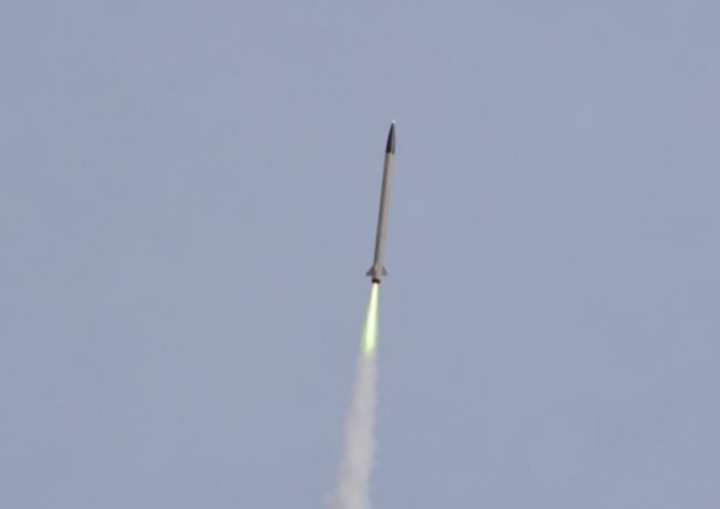
The Argonia Cup payload, 2022–23
Our Argonia Cup payload had to bring a golf ball back down to a target on the ground. I was junior lead of 15 to 20 engineers designing a vehicle that takes off and lands vertically. The rocket carried it up and released it.

Club president, 2024–25
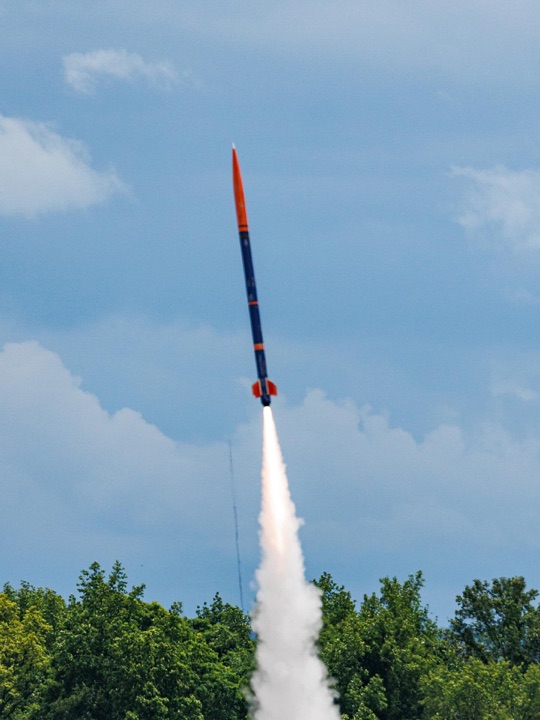
That year the club had more than 50 active members and three competition missions. I managed its finances and reviewed more than 500 pages of the missions’ technical documents. Our NASA Student Launch rocket flew its demonstration flight that April.
AIAA chapter president, 2023–24
The year before, I led Auburn’s student chapter of the American Institute of Aeronautics and Astronautics. I set up site visits, career fairs and talks with aerospace companies. I also organized the chapter’s trip to an undergraduate research conference at Cape Canaveral, where one of our members won first place for their research.